


The DEMPE Concept: Your Key to Asset and Transfer Pricing Efficiency
Tax authorities no longer accept passive ownership as a reason to claim profit. They require proof that a company is creating real, economic value, and that’s exactly what the DEMPE concept offers. It shifts the focus from where intellectual property (IP) is registered to where it’s actually developed, extended, maintained, protected, and exploited.
Regardless of whether you’re working with patents, software, trademarks, or brand assets, DEMPE gives you a clear, actionable map of who does what, and why it matters to your transfer pricing strategy. It bridges people, processes, and profits, allowing you to align profit allocation with its genuine business activity and comply with OECD BEPS guidelines.
At T1 Advisory, we guide international companies through this transition with customized DEMPE analysis, value chain support, and documentation. And in this article, we will discuss what the DEMPE framework is, why it is more important than ever in the post-BEPS era, and how it works in practice, including a real-world case study.
Understanding the DEMPE concept: where IP value is really created
DEMPE concept stands for Development, Enhancement, Maintenance, Protection, and Exploitation of Intellectual Assets. The five activities capture the entire value creation process behind IP- from upstream R&D to downstream commercial exploitation of the asset.
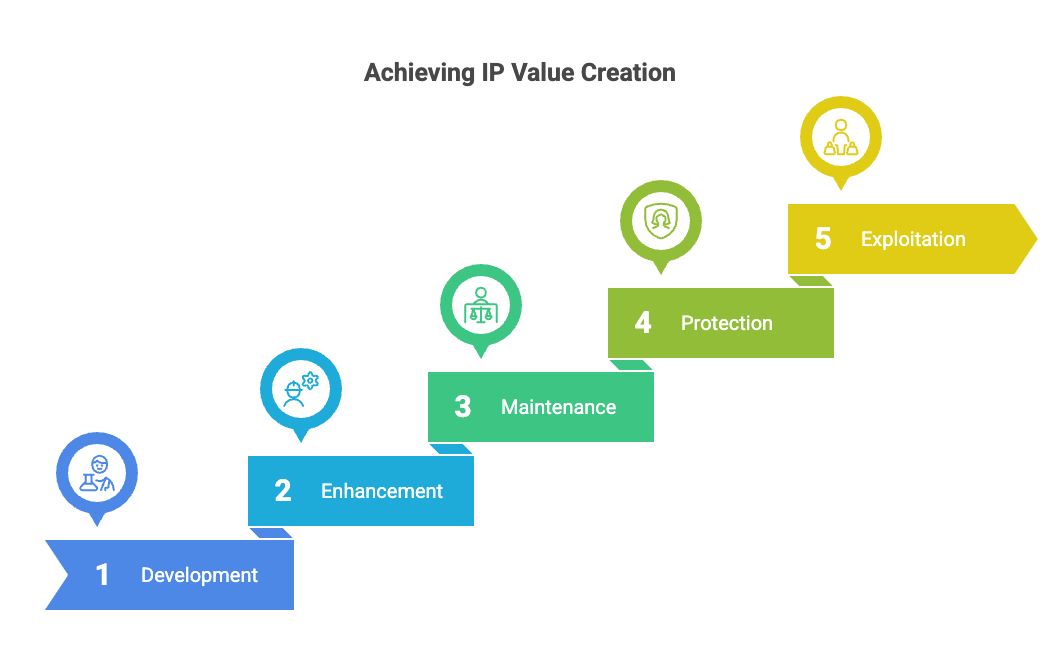 The concept was endorsed by the OECD in BEPS Actions 8-10, a landmark change in global taxation. Instead of hoping that the beneficial owner of an intangible asset will automatically enjoy the benefits associated with the property, the OECD model asks a different question: Who actually creates the value?

DEMPE looks at the economic reality of intangibles:
- Who funds and performs R&D?
- Who creates the asset through marketing or product development?
- Who maintains the legal protection?
- Who actually exploits the asset in the marketplace?
These roles are typically divided among different parties in different countries – and tax authorities now insist on clear, fact-based answers to all of them.
Why DEMPE matters: Keeping profit aligned with substance and compliant
In a cross-border group structure, it’s not uncommon for IP to be registered in one territory but developed or used in others. Without a DEMPE-based analysis, this can lead to misallocation of profits and activities – and that’s exactly what tax authorities are now looking for.
By assigning each DEMPE function and identifying who performs it, companies can establish transfer pricing practices based on where and how value is created. This ensures that profits are properly allocated, reduces the risk of double taxation, and better protects the company in the event of a tax audit or dispute.

Here are the reasons why DEMPE is important in practice:
- Prevents unwarranted profit shifting to low-tax jurisdictions.
- Reduces non-compliance risk by clearly delineating value-added activities.
- Aligns transfer pricing with reality.
- Influences strategic decisions on where to locate functions and assets.
DEMPE is not only compliance. It gives companies a better definition of their value chain, leading to an improved tax position and business strategy.
At T1 Advisory, we guide companies through every step: from identifying major value-creating activities to preparing detailed analysis and documentation. Contact us to ensure your intangible asset plan meets today’s compliance requirements.
Legal background: How OECD BEPS guidelines introduced DEMPE
The OECD’s BEPS Actions 8-10 radically reshaped the global tax landscape to end artificial profit shifting, particularly in the case of intangibles. These reforms pushed tax outcomes to be more aligned with actual business activities, rather than legal arrangements.
With BEPS, the old model – profits could be booked wherever the intellectual property was located – is outdated. Instead, companies must now demonstrate who does the work, who takes the risk, and who contributes to value creation. The OECD has recognized DEMPE as a structured approach to examining these contributions.
This shift has profound consequences: legal ownership alone is no longer sufficient to justify income. Tax authorities require substance-based evidence that reports which parties perform the DEMPE functions – and why their share of the profit reflects that effort.
Here’s what’s changed in the rules:
| Key principle | Before BEPS | After BEPS (DEMPE approach) |
| Basis for profit allocation | Legal ownership of IP | Functional contribution: who performs DEMPE activities |
| Income location | Country where IP is registered | Country where value is economically created |
| Role of documentation | Formal, often minimal | Detailed analysis of functions, assets, and risks |
| Tax authority expectations | Paper-based agreements often sufficient | Substance over form: real activities must be documented |
This new standard requires multilateral teams to rethink their approach to structuring and justifying transfer pricing frameworks. It’s no longer enough to simply allocate profits to the rightful owner of the intellectual property – they must be able to demonstrate that a company has a material involvement in the life cycle of the asset.
Real-world case: How the IRS challenged Medtronic’s IP structure under DEMPE principles
The Medtronic vs. Internal Revenue Services (IRS) case is a typical example of how tax authorities allocate profit on intangible assets, even before the official adoption of the DEMPE approach. The case involved the allocation of royalties between Medtronic’s U.S. parent and its Puerto Rico subsidiary, which manufactured medical devices under license.

The critical issue:
The IRS argued that the royalty payments made by the Puerto Rican subsidiary did not accurately reflect the economic contributions of the U.S. entity. While the U.S. parent performed the majority of the value-added functions – R&D, product development, and IP protection – the Puerto Rican entity was allocated a disproportionate share of the profits.
The IRS contended that Medtronic’s transfer pricing policy failed to reflect the substance of the activities performed, particularly in light of the BEPS guidelines, which emphasize that profits should be based on the location of actual value creation.
In response to the IRS’s challenge, the distribution of DEMPE functions within the Medtronic group was carefully analyzed:
| DEMPE Function | Performed by | Key contributions |
| Development | Medtronic U.S. | Conducted R&D, developed core products, filed patents, and performed clinical trials. |
| Enhancement | Medtronic U.S. | Ongoing product improvements, innovation management, and strategic oversight in product development. |
| Maintenance | Medtronic U.S. and Puerto Rico subsidiary | U.S. ensured regulatory compliance, product safety, and quality. Puerto Rico managed manufacturing standards. |
| Protection | Medtronic U.S. | Oversaw IP registration, legal defense, and enforcement of patent rights globally. |
| Exploitation | Puerto Rico subsidiary | Manufactured and distributed devices under the licensing agreement with Medtronic U.S. |
The IRS’s argument:
The IRS claimed that Medtronic U.S. – the primary contributor to the development, enhancement, maintenance, and protection activities – was entitled to a larger share of the profits. The Puerto Rican subsidiary, dedicated to exploitation, was considered a normal, low-risk activity and therefore entitled only to a cost-plus return, not a share of the residual profits.
Result:
In 2016, the U.S. Tax Court ruled in favor of Medtronic, adopting the company’s Comparable Uncontrolled Transaction (CUT) method for calculating royalty rates. However, in 2018, the Eighth Circuit Court of Appeals overturned the ruling, finding that the Tax Court did not sufficiently weigh the complexity of the functions performed by Medtronic U.S. The case was remanded for a new trial to reconsider the transfer pricing framework.

Takeaways for multinational enterprises (MNEs):
- Function-based profit allocation: The Medtronic case highlights the need to analyze the economic contribution of each entity under DEMPE so that profit allocation occurs where value is created.
- Role of documentation: MNEs need to have accurate functional analyses to support intercompany transactions, particularly those involving intangible assets.
- Tax authority attention: As tax authorities pay increasing attention to the allocation of intangible assets, companies must ensure that transfer pricing reflects real business activity and value creation – not fictitious contracts or titles.
At T1 Advisory, we provide a professional DEMPE review and ensure that companies comply with international transfer pricing regulations, thereby reducing the risk of disputes.
Tangible vs. Intangible assets – why DEMPE makes sense only for the latter
In the context of transfer pricing, it is critical to understand the distinction between tangible and intangible assets, especially when applying the DEMPE model. This distinction is the basis on which tax authorities assess and allocate profits, especially in a cross-border context.

Tangible assets: Concrete, physical value
Tangible assets consist of physical items such as real estate, machinery, inventory, and equipment. These are assets that have a tangible, quantifiable presence and tend to be closely associated with manufacturing or operating functions. The value of tangible assets tends to be easier to allocate because their use and contribution to business operations are simple and geographically concentrated.
In contrast, intangible assets are not physical and are likely to be more difficult to manage from a tax perspective. They include patents, software, trademarks, brand names, copyrights and know-how. These assets typically have significant value but lack physical existence and are therefore more difficult to value.
Why does DEMPE only apply to intangible assets?
The DEMPE framework is merely applicable to intangible assets because such assets are dispersed in various jurisdictions and differently used by different entities in an MNE. Tangible assets are localized and typically controlled and used within the jurisdiction where the assets physically exist, but intangible assets are registered in one jurisdiction but can be created and used in another.
This physical separation introduces the complexity of profit distribution, and therefore DEMPE plays an important role in ensuring profits are distributed based on real value-creating functions, rather than purely legal ownership or registration.
For example, a patent is legally registered in a particular country, yet the R&D activities to develop the technology might be undertaken in a completely distinct jurisdiction. Similarly, marketing and branding activities may enhance the value of a trademark considerably even when the legal ownership is elsewhere.
The difficulty in determining fair value and profit apportionment
The allocation of profits relating to intangible assets requires a more exact approach. When compared to tangible assets, the profit in tangible assets can be more readily allocated to the physical use or geographical location of the asset. Intangible assets, however, will usually require functional analysis to determine where value is created.
- R&D functions (development) can be conducted in one location, but the exploitation (e.g., sales or licensing) in another.
- IP development, including through improved enhancements or longer innovation, could extend to other jurisdictions and business activities.
- IP, including patent rights or trademark infringement, can take place in other countries, depending on the location of the IP use.
Tax authorities, especially under OECD BEPS guidelines, now require companies to report the true economic contribution of each entity involved in the creation, maintenance, and use of intangible assets. Misallocation of profits with respect to intangibles can lead to serious risks such as double taxation and penalties.
By determining which of the activities (development, enhancement, maintenance, protection, and exploitation) are performed where and by whom, DEMPE ensures that profits from intangible assets are redistributed equitably according to the actual obligations and risks incurred.
In the era of BEPS, DEMPE is essential for the proper allocation of profits related to IP. Tangible assets are easier to allocate because they are likely to be used in a single jurisdiction. Intangibles, by their very nature, are likely to cross borders, so careful DEMPE analysis is crucial to ensure compliance.
Outside of DEMPE – why intangibles documentation is a necessity
The requirement for detailed documentation cannot be overstressed in the case of transfer pricing and intangibles. The success of economic and functional analysis constitutes the cornerstone of tax compliance whereby the value-creation function of every entity is clearly delineated.
Without proper DEMPE documentation, MNEs risk triggering tax audits where the government may dispute profit allocation, redistribute income in some instances, impose penalties, or fine them. Intellectual property economic substance documentation not only fulfills the regulatory requirement but also protects from disputes, with a clear visibility of value creation in every jurisdiction.
Preparation of critical documents:
- Functional analysis of intangible assets;
- Detailed value chain report;
- Intercompany agreements;
- Royalty policies and licensing agreements;
- Arm’s length principle documentation.
Compliant with OECD BEPS guidelines, a sound documentation system protects MNEs from future exposures to tax disputes and ensures that intercompany pricing has solid and justifiable facts supporting it.
By ensuring transparency around how intellectual property activities are treated in various countries, companies can create a strong defense of their transfer pricing structure.
Primary benefits of the DEMPE approach in transfer pricing advisory
The adoption of a DEMPE-based transfer pricing strategy provides paramount benefits that can empower companies’ tax posture and operational excellence efficiently.
Key benefits:
- Accurate profit attribution = reduced tax exposures;
- Extensive documentation = reduced compliance risk;
- Compliance across all jurisdictions = global risks contained;
- Active asset management = long-term business continuity.

Firstly, the appropriate profit attribution ensures the allocation of profits to respective entities based on their actual economic contributions, which means reduced tax charges and increased compliance with global standards.
Furthermore, maintaining detailed, defendable records provides a strong line of defense in tax audits, minimizing the risk of adjustments and penalties.
Additionally, the implementation of DEMPE processes across different jurisdictions ensures continued compliance with international tax regulations as well as local requirements, minimizing potential risks across operations.
Finally, asset management via a strategic DEMPE approach allows entities to make better-informed decisions on where and how to locate key functions, ensuring long-term viability and value.
How does T1 Advisory keep you compliant and confident?
At T1 Advisory, we provide DEMPE analysis that is tightly tailored to the existing business model.
By evaluating the economic contributions of each entity of an MNE, we ensure that the transfer pricing framework accurately reflects a value creation with a low risk of non-compliance.
Our transfer pricing documentation assistance ensures compliance with OECD BEPS guidelines and local legislation, reducing the likelihood of controversy.
T1 Advisory is your partner in creating a comprehensive and compliant strategy. Contact us to receive a personalized DEMPE analysis and expert advice on structuring intellectual property and cross-border operations in alignment with international compliance requirements.
Summary
DEMPE is not just a compliance mechanism, it is the cornerstone of successful and secure profit attribution for intangible assets. In the post-BEPS world, legal ownership of intellectual property is not enough; the economic substance of the activities must be demonstrated.
With T1 Advisory, you gain a strategic partner who will align your business with international tax compliance standards. By focusing on DEMPE analysis, we enable your company to manage intellectual property with ease, minimize risk, and ensure long-term business sustainability.
DEMPE & Transfer Pricing: Expert responses
How can DEMPE help my company meet OECD BEPS guidelines in today’s global tax environment?
DEMPE gives a systematic way of linking profits to actual value creation, making sure that companies pass the substance-over-form test of BEPS. By capturing actual economic contribution per entity, DEMPE avoids profit shifting and remains in compliance with global tax standards.
Why is DEMPE significant in reducing double taxation risk for companies?
In ensuring that profits are allocated based on where value is truly created, DEMPE minimizes the risk of double taxation across jurisdictions. This economic substance approach ensures that MNEs transfer price in a way that aligns with their economic substance, reducing controversies with tax authorities.
Why is DEMPE now more crucial than ever, particularly for cross-border companies?
Since tax authorities are turning their attention to profit allocation more than ever before, DEMPE enables companies to stay on the path set by international tax rules, particularly the OECD BEPS. DEMPE provides a robust framework for the management of intangibles across jurisdictions and reduces double taxation risk exposure and penalties.
How does DEMPE help avoid profit shifting to low-tax jurisdictions?
DEMPE ensures that profits are allocated to the countries where value is being created, not artificially shifted to low-tax locations. By following the tracing of value-creating functions, it aligns the allocation of income with the actual economic activities performed in each place.
What are the main challenges for companies in ensuring their transfer pricing models are consistent with DEMPE?
One of the main difficulties is to properly identify and document the functions, risks, and contributions of each entity involved in intangible asset management. Companies also struggle to come up with detailed documentation that serves the needs of tax authorities.
