


Transfer Pricing Methods: Choosing The Right Path For Your Business
Some transfer pricing techniques seem to make sense – until they are tested by the complexity of the real world. Audits. Inconsistent information. Cross-border tensions. Internal misalignment.
When that moment comes, form isn’t enough. You need a tool that accurately reflects how your business actually operates – not how it is reported.
At T1 Advisory, we start where value is created: your operating model. The right approach should align with that reality, not fight it.
In this guide, we’ll take a step-by-step look at each of the five basic transfer pricing approaches – their strengths, weaknesses and best applications – and help you determine a path that’s not only defensible, but sustainable. Because future-proofing starts with choosing an approach that’s built to last.
Understanding transfer pricing: Principles, goals, and impact
When you do business activities across borders, you’re not just managing products, people, and profits. You’re managing perceptions – of tax authorities, investors, partners, and your own organizations. Transfer pricing is one of the clearest windows into your business.
In order to be compliant, a company must have evidence that its statements and practices are consistent.
Tax authorities no longer want to see just numbers on a page. They want to know: Does your model make sense? Are your intercompany prices credible? Is your story consistent?
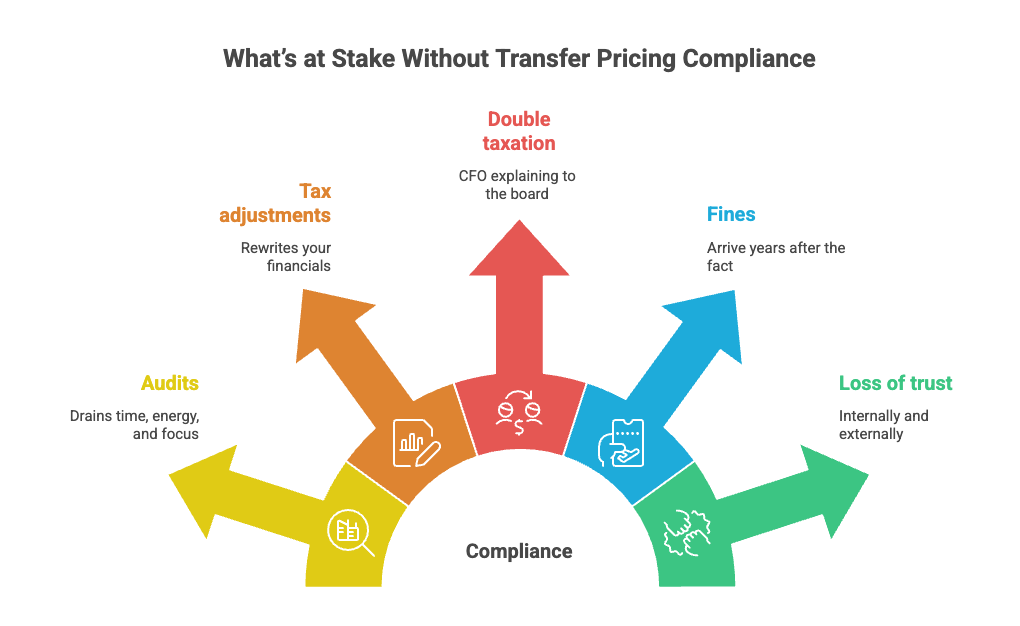
If these answers are not obvious, the consequences can be immediate, and expensive:
- Audits that drain time, energy, and focus;
- Cross-border tax adjustments that rewrite your financials;
- Double taxation that no CFO wants to explain to the board;
- Fines and penalties that arrive long after the event;
- And, perhaps most damaging, a loss of trust – both internally and externally.
But here’s the real opportunity: Good compliance isn’t just protection. It is power.
A tool of clarity is an effective transfer pricing policy. It allows management to see where value is being created, how risk is being controlled, and the reasons for profit flows. It accelerates decision-making, keeps teams on the same page, and eliminates guesswork when the stakes are high. In times of change, new markets, restructuring, M&A, this clarity is precious.
Most of all, it forces the right conversations:
- Who are our true value drivers?
- Are we rewarding the right entities for the right work?
- Are we operating on facts or assumptions that no longer reflect the way we do business?
Good transfer pricing compliance goes beyond: it tells a consistent story about how your company operates and where it creates value.
“We know our business. We know where the value is. And we’re ready to express it.”
The ability to maintain this clarity is what separates top companies in an era that values transparency above all. It inspires confidence. It protects growth. It demonstrates leadership.
Transfer pricing compliance: Why it protects your business from risks
It is like infrastructure. You don’t see it when it’s working, but its absence becomes painfully clear the moment issues surface. Without it, transactions languish, restructurings are complicated, and cross-border operations are legal puzzles that no one wants to untangle. Transfer pricing rules may start with the tax authorities, but their impact lands on strategy, cash flows, and operations.
Need to create a new entity? License IP? Move capital? It all depends on your ability to prove that your internal pricing is rational, defensible, and intentional.
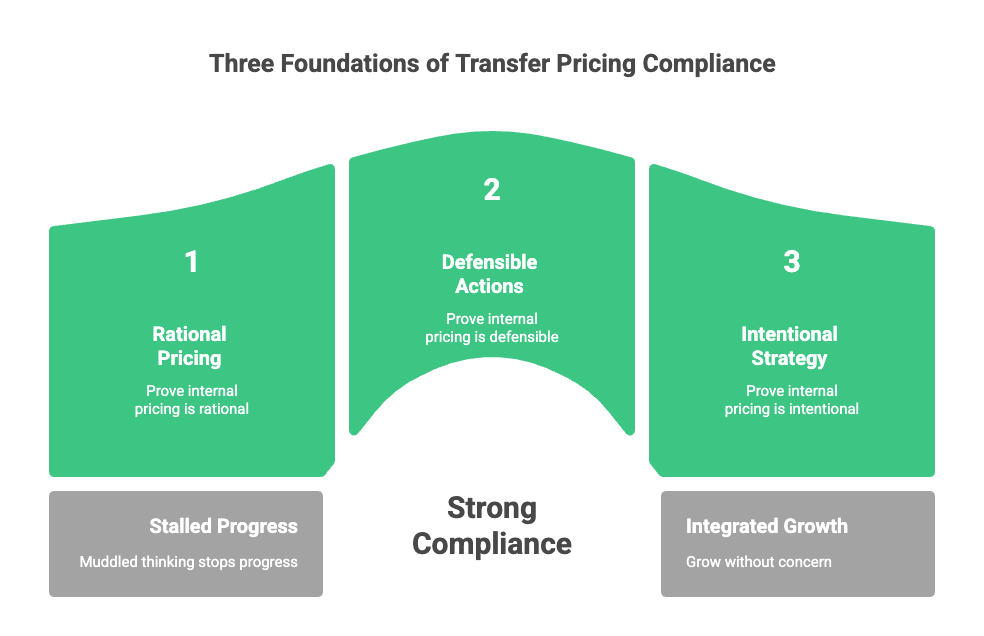
Because muddled thinking and old-fashioned rationales aren’t just dangerous. They stop progress.
Strong compliance paves the way. It’s what lets your CFO sleep at night and your local teams move quickly without questioning headquarters. When compliance is integrated, you can grow without concern.
Controlled and uncontrolled transactions: Definitions and real-life examples
Before you choose a transfer pricing approach, you need to understand what you’re really pricing – and who’s involved. It starts with a simple distinction: controlled or uncontrolled transactions.
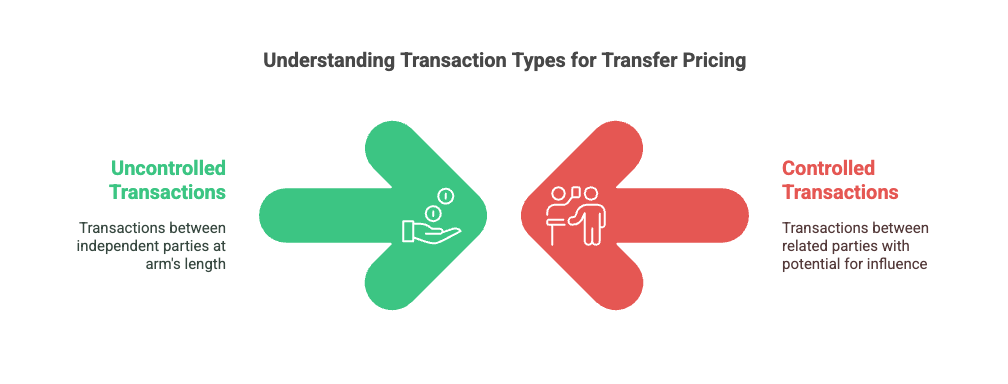
This isn’t a technical term, it’s the lens through which tax authorities, advisors, and auditors will view your intercompany pricing. Misunderstand the difference and you could be using the wrong benchmark, choosing the wrong method, or justifying the unjustifiable.
What are controlled transactions?
Controlled transactions occur between related parties, typically multinational group companies. These relationships give rise to the potential for pricing to be set by internal interests rather than market forces.
Examples of controlled transactions:
- A U.S. parent sells components to its Mexican manufacturing subsidiary.
- A French company licenses proprietary software to its Singapore affiliate.
- A German entity provides internal IT services to other group companies.
- A Dutch holding company is levying management fees to its branches everywhere.
The salient point? Control and influence exist. A party in the transaction possesses (direct or indirect) capacity to influence terms, which is what tax authorities follow.
What are uncontrolled transactions?
Uncontrolled transactions are between independent parties — arm’s length companies that do not share common ownership or control. They are true market-based transactions, and they are the benchmark used to determine whether related-party pricing is fair.
Examples of uncontrolled transactions:
- A Spanish distributor buys wine from an unrelated Italian winery.
- An Indian e-commerce company licenses cloud software from a separate, unrelated U.S. vendor.
- A Japanese-owned third-party logistics firm provides a third-party fashion brand with warehousing.
These are the real-world comparables that help determine if your controlled prices are consistent with what the market would naturally bear.
The importance of comparability for defending your transfer pricing policy
To be able to justify your prices, it’s not enough to say they are fair – you have to show that they hold up against real economic activity. This is the purpose of comparability. It links your internal prices to external market activity and gives your policies legitimacy when you need it most.
Good comparability is not speculation – it is benchmarking.
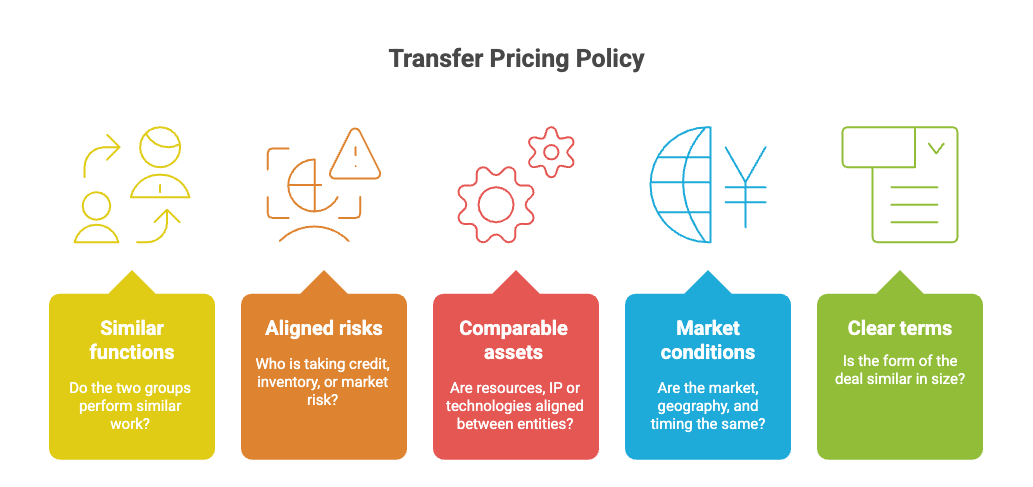
That’s what it is all about when it comes to selecting reliable peers:
- Similar functions: Do the two entities do similar work?
- Aligned risks: Who’s taking credit, inventory, or market risk?
- Comparable assets: Are resources, IP or technologies aligned?
- Market conditions: Same market? Same geography? Same timing?
- Clear terms: Is the form of the deal similar (size, duration, exclusivity)?
The better the fit, the stronger your defense.
Overview of transfer pricing methods
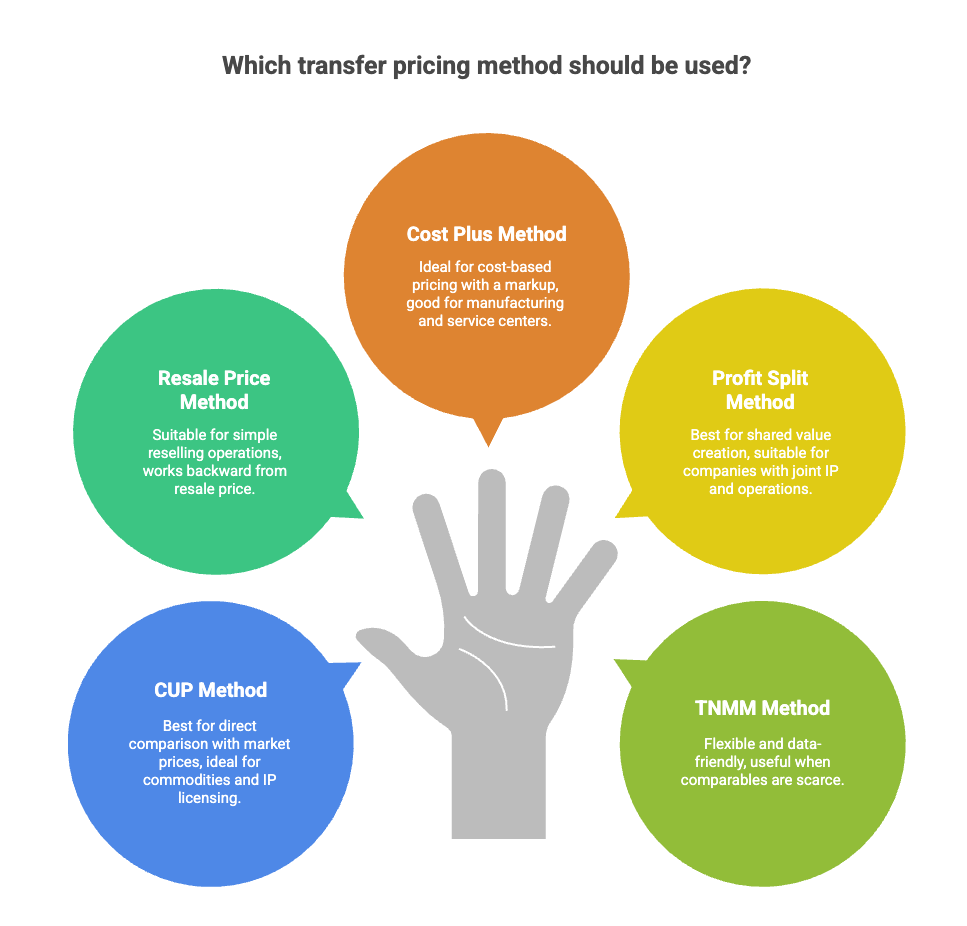
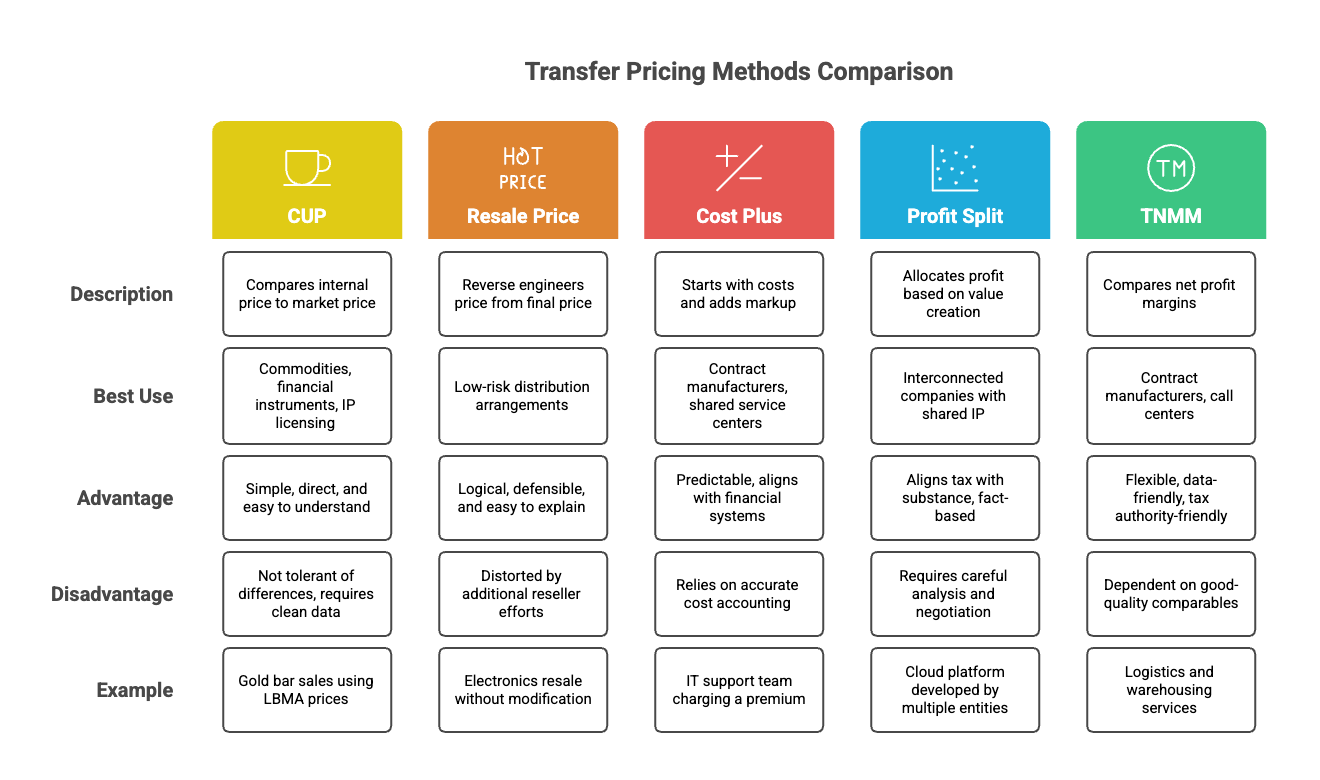
Comparable Uncontrolled Price (CUP) Method
You enter a store and buy a bag of rice. You are told the price. Now your cousin comes along and says he will sell you the same bag. Would you not pay the same? That’s CUP in a nutshell – comparing your internal price to the price quoted in the real world under similar conditions.
It’s the clearest and most direct method. You compare a controlled transaction, such as a license agreement or a sale of goods between related parties, to an extremely similar, unrelated transaction. If the prices are identical, you’re doing well.
| How it works | When to use it |
| You find a comparable transaction between independent parties involving the same or very similar product, under similar terms, timing, and volume. If your internal deal aligns with that external price, you’re in strong territory. | Good for commodities, commodity products, financial instruments, and IP licensing, especially when market prices or industry databases provide clean, external comparables. |
| Why it matters | Watch out |
| Tax authorities love CUP because it’s simple: if you can say, “Look, this is what the open market is charging,” the argument becomes so much shorter. It shows that you’re not playing hide-and-seek behind formulas, you’re pricing like any reasonable, stand-alone business. | This is not a tolerant approach to differences. One out-of-balance contract clause, or a slight variation in product quality, and the comparison can fall apart. Without clean, apples-to-apples data, CUP becomes difficult to defend. |
Real-world feel
A Swiss trading company sells gold bars to its Indian subsidiary. The global market (via the LBMA) provides daily prices for the same grade and quantity. CUP gets it right here – nothing to guess, nothing to argue.
Resale Price Method (RPM)
Think of this method as reverse engineering a price tag. Your subsidiary is reselling a product in the marketplace. You start with the final price, then work backwards, subtracting a gross margin that a typical independent reseller would expect to make. What you’re left with is what your internal selling price should have been.
This is the method to use if your affiliate’s job is simple reselling – they don’t innovate, brand, or transform the product. They just move it from point A to point B.
| How it works | When it works best |
You take the final resale price to the customer, subtract a market-based distributor margin, and you’re left with a defensible transfer price between affiliates. Think of it like this: Resale price – standard margin = intercompany price. | This method is ideal for low-risk (limited) distribution arrangements – for example, when a subsidiary imports finished goods and sells them with minimal involvement in marketing or product development. The purer the function, the purer the application. |
| Why it’s effective | Where it can get you into trouble |
| It’s logical, defensible, and easy to explain: “Here’s what we sold it for, here’s a reasonable margin, the rest is upstream.” It also makes audits easier, especially if you have good gross margin data from external benchmarks. | If the reseller does more than just distribute-think local promotion, technical modification, bundling, those additional efforts distort the margin. Your simple RPM isn’t so simple anymore. |
An example
A Japanese subsidiary buys electronics from the U.S. headquarters and resells them unchanged to local retailers. They do not advertise or service the products. You get gross margin data on similar third-party distributors, and, voila, you have a simple RPM application.
Cost Plus Method (C+)
While the CUP and RPM methods look outward, Cost Plus looks inward. It’s a bottom-up method. It starts with the actual costs incurred and then adds a reasonable mark-up that reflects what an independent contractor or producer would be paid to do the same work.
It’s realistic, predictable, and works well for day-to-day, low-risk activities.
| How it works | When to use it |
You start by calculating the total cost of the good or service – materials, direct labor, overhead. Then you add a benchmark markup based on similar businesses in the open market. Your transfer price is what you get. Clean, logical, and tied directly to how you actually do business. | Cost Plus is ideal for contract manufacturers, shared service centers, or IT support centers, especially if they do not involve IP ownership, strategic risk management, or entrepreneurial activities. |
| Why it helps | Pitfalls to be aware of |
| It gives you pricing predictability, is easily aligned with financial systems, and is widely accepted by tax authorities in Advance Pricing Agreements (APAs). It also works well in multiple jurisdictions with minimal market data. | If your cost accounting is haphazard or your mark-up targets are irrelevant, the whole system is at risk. And it may undervalue services that involve expertise, innovation, or strategic acumen, even if they look safe on paper. |
One to remember
There is a dedicated internal IT support team in Poland that provides help desk facilities for the group. No strategic risk, no third-party external customers, just good old-fashioned operational delivery. You charge a premium over equivalent third party IT providers and your price is bulletproof.
Profit Split Method
This method doesn’t just ask “what did each party do?”, it asks “how did each party create value?”
In mature international companies where multiple parties all share the brainpower, risk, and IP, the Profit Split Method offers a way to reflect the team’s collaborative economics. It’s the co-authorship model for transfer pricing.
| How it works | When to use it |
Allocation of the total profit of a joint activity to related parties based on their actual contribution of function, asset, and risk. Normal roles are repaid first with a normal return, and the remaining profit is allocated to key value drivers like IP or strategic input. | This toolkit is custom-designed for interconnected companies with shared intangibles, cross-border IP, or interdependent operations. If value is co-created and hard to disentangle, e.g. biotech R&D teams across different countries, or a global SaaS platform jointly created and sustained, this is your go-to. |
| What makes it so powerful | What to recall |
| Profit Split is the method of emerging business models. It aligns tax with substance, requires you to prove to tax authorities that you are familiar with your own value chain, and precludes unenthusiastic profit redistributions by giving you a clear, fact-based story to tell. | It is not a “plug-and-play” situation. It requires careful functional analysis, shared understanding on valuation methods, and often, negotiation. If companies are unsure how value is allocated inside, don’t expect tax authorities to accept the story either. |
Where it shines
A cloud analytics platform is developed by an EU-headquartered tech company and its American parent. R&D is done in France, training of algorithms is done in Canada, commercialization is done in Singapore. No single method can slice that so finely, but Profit Split welcomes the whole curve of value creation and distributes profits accordingly.
Transactional Net Margin Method (TNMM)
Use TNMM, the Swiss Army knife of transfer pricing. It is not as attractive as CUP or as tailored as Profit Split, but when comparables are scarce or transactions are routine, this method works – well and defensibly.
| How it works | When to use it |
TNMM compares net profit margins rather than prices. You threaten the easier, low-risk party by comparing its margin (on costs, sales, or assets) to the margins of similar independent companies. If it’s in the arm’s length range – you’re good to go. | Best for contract manufacturers, call centers, logistics hubs, or back-office support — i.e., steady-state operations easy to benchmark and not central to IP strategy or value creation. |
| Why it is practical | Blind spots |
| It’s flexible, data-friendly, and tax authority-friendly, especially in emerging economies. Even when you lack transaction-level data, TNMM can still use observable economic outcomes as the basis of your pricing. | TNMM is dependent on good-quality comparables. If external benchmarks are not functionally equivalent, or when local market conditions distort margins, your numbers can be suspect. It may also lose the fine nuances in complex, IP-driven businesses. |
Watch it in action
A company based in Argentina provides logistics and warehousing to the group. No sales, no customers, no branding, only frictionless storage and fulfillment. Its net profit margin is to be compared with third-party logistics providers in South America. Clean, reliable, low-friction, classic TNMM territory.
Expert tips: Matching transfer pricing methods to company needs
Transfer pricing is dynamic, not static. What worked well yesterday may be risky the next day.
Business models change, markets rise and fall, and new taxes come into effect. A model that worked extremely well in a one-time execution can fall behind, and your company won’t know it until an audit alerts.
That’s why high-performing companies keep their transfer pricing model dynamic, not a one-time configuration. Review needs to happen regularly, especially when your company:
- enter or exit markets;
- introduce new products or services;
- centralize or decentralize operations;
- transfer risk profiles or functional ownership;
- restructure IP ownership or financing;
- adapting to a changing regulatory landscape (e.g., Pillar Two, BEPS updates).
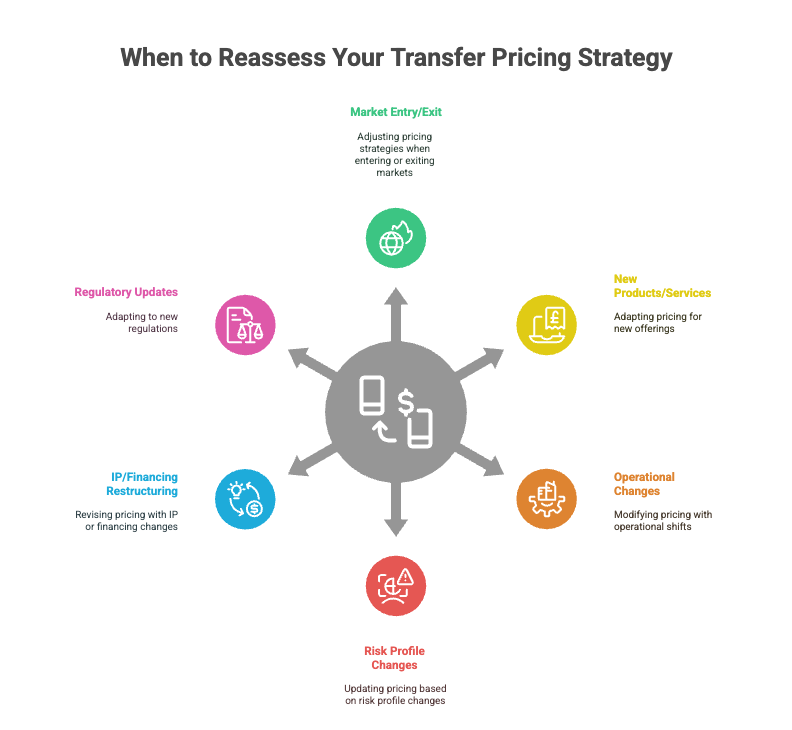
Pro tip: Establish a formal review cycle, annually or as part of strategy planning, and include both tax and business leaders. If the business has changed, so should the pricing rationale.
A transfer pricing model is only as good as its relevance. Keep it current. Keep it defensible.
Pros and cons of major transfer pricing methods: What to consider
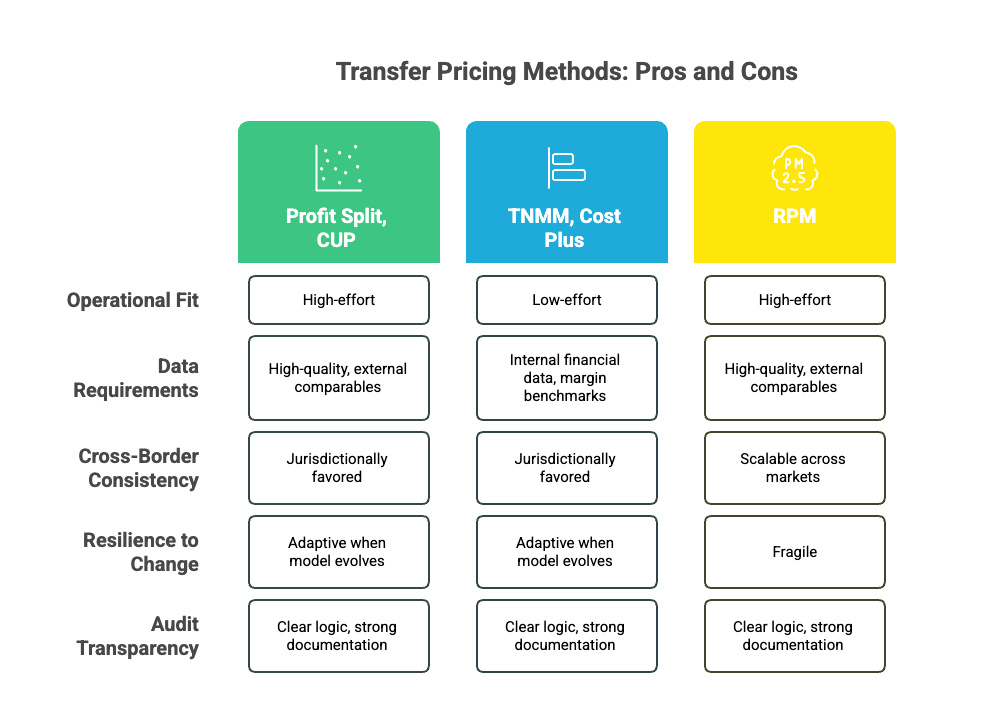
Each of the transfer pricing methods is a lens, not a formula. Some allow you to focus closely on prices, such as CUP or RPM, and some allow you to focus on the big picture of value, such as Profit Split or TNMM.
But even the sharpest lens is useless if it does not show what the business actually does. It is not about choosing the most “popular” strategy, it’s to choose the one that best describes the economic reality, an available data, and a level of risk. Because the best strategy isn’t the one that’s brilliant in theory – it’s the one that still works under fire.
Unique solutions: Why companies choose T1 Advisory for compliance
Each method has trade-offs: simplicity vs. complexity, intuition vs. data, transparency vs. control. Which one you use depends not only on your priorities, but on how you work and where you’re going.
There is a philosophy behind each method. Do you sacrifice simplicity for defensibility? Accuracy for flexibility? The wrong approach creates tension. The right one builds trust with tax authorities, investors, and even your own teams.
This is not just about compliance. It’s about clarity – operational, strategic, financial.
T1 Advisory helps international companies choose transfer pricing models that work for their business, and stand the test of time.
Learn more in the T1 Advisory blog. We explore methods, risks, and the mindset behind sustainable transfer pricing.
Q&A with T1 Advisory: Expert answers to complex transfer pricing questions
1. How do I know which transfer pricing method is best for my company’s transactions?
Start by mapping your value chain – what type of transaction, what comparables exist, what functions, risks and assets are involved will point you in the direction of the best method. The “best” method is the one that best captures the way your business operates in the real world and holds up under scrutiny.
2. What are common mistakes in selecting or applying transfer pricing methods?
The most common mistake is trying to make a method fit the transaction instead of letting the transaction dictate the method. Others include using outdated information, ignoring functional distinctions, or minimizing documentation requirements.
3. Can I apply different transfer pricing methods to different types of transactions within the same company?
Yes, and in most cases, you should. Different types of transactions (e.g., goods vs. services vs. intangibles) generally require different methodologies to accurately capture the economics and comply.
4. Under what circumstances is the Profit Split method preferable to other methods?
Profit Split is typically used where both parties contribute unique, high-value intangibles or where it is difficult to measure separate contributions by using typical comparables. It is optimal in unified, interdependent business models with mutual value creation.
5. How often should a company review and update its chosen transfer pricing method?
Once a year is best – especially in rapidly evolving industries or where there are structural, economic, or regulatory changes. It may not make sense to continue what was appropriate last year when functions, risks, or pricing benchmarks may have changed.
6. How does T1 Advisory help businesses select the most effective transfer pricing method?
We go beyond spreadsheets-starting with a thorough examination of your operating model, transaction flows, and strategic goals. Then we tailor the most defensible methodology to that reality, ensuring compliance without compromising business agility.
7. What are the benefits of choosing T1 Advisory over other advisory firms for transfer pricing?
We combine technical quality with real-world, business-oriented experience – our advice is built to withstand. Our professionals apply global experience, regulatory knowledge, and a customized methodology that adapts to your business.
8. What are advance pricing agreements (APAs) and should my company consider one?
An APA is a binding contract with tax authorities that locks in your transfer pricing for future years, reducing audit risk and uncertainty. They’re best used for complicated or high-risk transactions where predictability is worth the upfront cost.
